
Olivia Cohen
Immigration Attorney
McGill Faculty of Law (BCL/JD). McGill Desautels (B. Comm). Inadmissibility, business and economic immigration.

 Cohen Immigration Law
DUI / DWI
Share your plan to help us assess what can be resolved within your timeline.
Here's what happens after you hit submit.
It takes approximately 5 minutes. Your answers go directly to our firm — and nowhere else.
A senior attorney goes through your answers before anyone picks up the phone.
The call is free and you're not signing anything. You'll hear which option fits your record (criminal rehabilitation, a TRP, or a legal opinion letter), what it costs, and how long it takes. If you're not eligible yet, we'll tell you that — and when to come back.
If you want us to file, we prepare the application, submit it, and keep you updated. You'll have the full price in writing before we start work.
Your file will be assessed by expert immigration attorneys at Cohen Immigration Law, with support from our paralegals, regulated immigration consultants, and case managers.
Immigration Attorney
McGill Faculty of Law (BCL/JD). McGill Desautels (B. Comm). Inadmissibility, business and economic immigration.
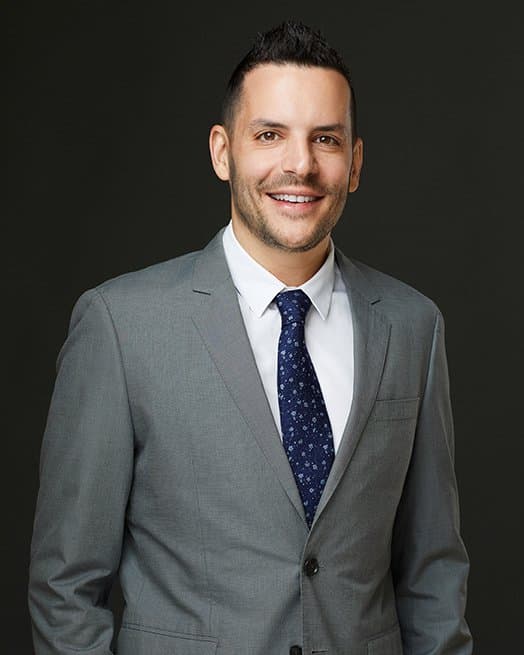
Senior Attorney
McGill Faculty of Law. Citizenship, business immigration, and complex eligibility files. Listed in Who’s Who Legal, Corporate Immigration.

Senior Attorney, Director of Operations
McGill Faculty of Law (BCL/LLB/LLM). MBA, Grenoble. Oversees firm-wide case management.

Senior Attorney
Université de Montréal. Director, Avocats hors Québec. Federal and Quebec economic immigration, family reunification.
Often not without a plan. Canada looks at whether the US charge has an equivalent under Canadian law, and impaired driving does. How the charge was resolved, when the sentence was fully completed, and when you need to travel all change which option is open — a Temporary Resident Permit, Criminal Rehabilitation, or in some cases a letter confirming you're already admissible. This assessment is the first read; a lawyer confirms it.
Yes, but the clock that matters is usually when the sentence was fully completed — fines paid, probation finished, licence reinstated — not the night of the arrest. Canadian impaired-driving penalties also changed in late 2018, which can affect how a DUI is classified. The exact date is worth getting right, which is why the form asks for it.
Canada doesn't automatically follow a US reduction or a diversion programme. Officers look at the underlying conduct and how the case actually ended, not only the label on the disposition. List what happened as it was charged and how it was resolved — a lawyer will map it to the Canadian equivalent.
A Temporary Resident Permit is permission to enter despite being inadmissible — usually for a specific trip or a limited period. Criminal Rehabilitation is a permanent decision from the Canadian government that the conviction no longer makes you inadmissible at all. A TRP is faster; Criminal Rehabilitation settles the question for good. Which one fits depends on your timeline and how long ago your sentence ended.
The assessment is free, and so is the first call with an attorney. If you hire us, you pay a fixed fee based on how complex your record is and how soon you need to travel. We’ll tell you the amount, and we don’t start until you agree to it.
No. It's a structured first read based on what you tell us, and it can be wrong — offence equivalency between two legal systems is genuinely difficult and depends on the exact statute you were charged under. It's a starting point for a conversation with a lawyer, not a substitute for one, and no solicitor-client relationship is created by completing it.
It goes to Cohen Immigration Law and is reviewed by an attorney. It is not sold, shared, or used for anything other than assessing your file and contacting you about it. Your progress is stored in your browser tab only while you're filling the form out, and is cleared when you submit.